
Connected engineering Product in development
Unit CADTalk to the team
THE PRODUCT / BASE AND EVOLUTION

Parametric CAD for product development.
A vision for connected engineering.

Unit CAD gathers an existing parametric modeling base, as reported by the team, and a vision for multidisciplinary evolution. Unit AI and Engineering Core will connect requirements, deterministic engines and design tools, with engineer approval.

REPORTED BASE · INTEGRATIONS PLANNED
THE STARTING POINT

From component to assembly.

Solids 3D, parametric operations, rebuild tree, extrusions, cuts, surfaces and planes compose the reported base. Sheet metal, hems, folds, unfolds, flat patterns, DXF export and assemblies also integrate this starting point.

Advanced assembly relations and 2D detailing are under improvement. Initial priority is to connect APIs, voice, parametric editing and engineering drawings. HPS and X-Coil Unit are existing engines as reported; their conversational integration is a next step.

Website experience. Not a software release.
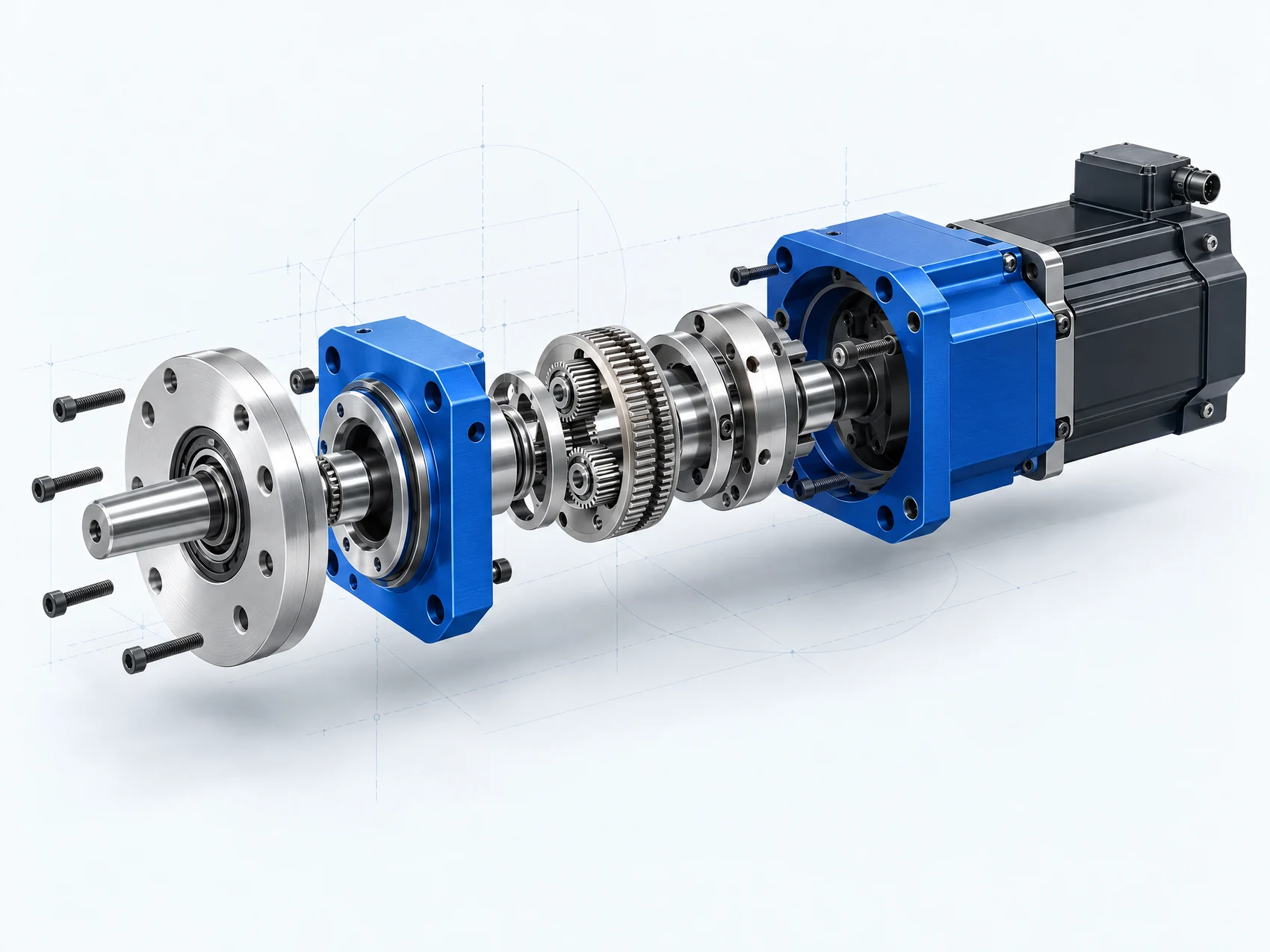
Conceptual mechanical composition of components; not created in Unit CAD
Mechanical assembly · Concept illustrationNot a software screenshot or a project created in Unit CAD.
CAD FOUNDATION

Model. Assemble. Document.

Each layer has its stage. Reported base, improvements and integrations.

Existing base · Reported

Existing CAD base

Parametric geometry as a starting point.

The team reports a professional CAD base with 3D solids, parametric operations, operation tree and automatic rebuild. A universal base for parts, machines and products, with multidisciplinary specializations.

  • Extrusions, cuts, surfaces and reference planes
  • Sheet metal, hems, edge bends, unfoldings and flat patterns
  • DXF export and component assemblies
Existing base · Under improvement

Assemblies and placement

Related components in an assembly.

The reported base already groups components into assemblies. Advanced relations, constraints and placements are under development to expand control over the assembly.

  • Component assemblies in the reported baseline
  • Advanced relations under improvement
  • AutoLayout planned with templates and placement rules
2D improving · Automation planned

Detailing and Unit Manufacturing

Manufacturing documentation as a priority.

2D detailing is under improvement. The planned automation should generate documentation from the parametric model, applying deterministic rules and review before issuance.

  • Views, sections, details, dimensions and tolerances
  • Welding, identification, bills of materials and sheet formats
  • Flat patterns and integrated multidisciplinary documentation planned
INTELLIGENCE AND ENGINEERING

Connect tools. Stay in control.

AI coordinates. Deterministic engines calculate. The engineer reviews and approves.

Planned integration

Unit AI planned

A co-pilot that will command tools.

By voice or text, Unit AI should interpret requirements, propose steps and trigger operations via internal APIs. The AI coordinates; the engineer reviews and approves.

  • Preview actions and confirm ambiguities
  • Parametric editing, assemblies and reversible history planned
  • Automated 2D detailing as an initial priority
Discover Unit AI
Planned architecture

Planned Engineering Core

A living master document for engineering.

The Core will be CAD-independent: it will gather requirements, assumptions, components, calculations, versions, approvals and dependencies. Deterministic engines will perform critical calculations, selections and validations.

  • Controlled changes across disciplines
  • HPS and X-Coil Unit reported as existing engines
  • Planned APIs and conversational integration
Discover the Engineering Core
Existing engines · Planned integration

HPS and X-Coil Unit

Engineering knowledge already encoded.

HPS is reported as an existing technical selection and BOM system. The X-Coil Unit already sizes coils and generates 3D geometry, as reported by the team. The connection to Unit AI will be a new integration.

  • HPS: compressors, valves, pumps and electrical components
  • X-Coil: tubes, circuitry, bends and collectors
  • Planned conversational comparison of thermal alternatives
PLANNED MODULES

Different disciplines. One connected project.

Planned integrations, not features available in this presentation.

Planned module

Unit Electrical

From specification to the 3D panel.

The planned module will use the master specification and component selection to develop electrical and panel design, with technical rules, applicable standards and manufacturer data.

  • Single-line, multi-line, power, control and protections
  • Motors, inverters, PLC, I/O, sensors, terminals, cables and gauges
  • Electrical BOM and 3D panel integrated with assembly
Planned modules

Unit P&ID and Unit AutoRoute

From the functional circuit to 3D piping.

The functional P&ID will evolve alongside component selection and precede routing. AutoRoute must respect connections, interferences, accesses and manufacturing rules.

  • Connections with position, orientation, diameter, fluid and pressure
  • Lengths, bends, fittings, BOM and isometrics
  • Controlled updates between circuits and 3D model
Planned module

Unit AutoLayout

Components in a functional layout.

Smart assembly should start from parametric templates and rules, suggesting positions and the structure and sheet metal required for the equipment.

  • Maintenance, accessibility and ventilation
  • Center of gravity, clashes and transport
  • Space for piping and panel integration
FUTURE EXPANSION

Beyond the core architecture.

Explore the planned scope of each area.

Planned expansionData, libraries and analysesTechnical information with origin and context.

Libraries and datasheets should connect components to conditions of use. Reports, analyses and computational tests are planned expansions, with methods and limits to validate.

  • Parts, compressors, condensers and fans
  • Aluminum profiles, insulated panels and thermal break
  • CFD studies as a future expansion, without an announced simulator
Planned expansionAutomated duct routingAir ducts, distinct from piping.

Duct routing remains a specific future expansion after the main architecture, with sections, curves and transitions for air conduction. It is distinct from the piping AutoRoute.

  • Air paths between equipment
  • Duct sections and transitions
  • Relation to layout and assembly connections
Planned expansionBuilt-in nestingFrom flat patterns to material nesting.

The planned expansion will lay out parts on sheet metal and panels considering dimensions, spacings and cutting constraints. The CAD flat patterns are not equivalent to a nesting optimizer.

  • Distribution of parts across sheets and panels
  • Manufacturing constraints and utilization
  • Link between parts and nesting plan
Planned expansionBOM and ERP integrationProduct information for manufacturing.

ERP integration remains a post-architecture expansion. It should share bills of materials and relate parts to production records, with no supplier or connector announced.

  • Bills of materials linked to the project
  • Match components to production
  • Interoperability subject to technical validation
NEXT STEPS

Progress guided by technical dependencies, not promises.

APIs and documentation first; integrations evolve by technical dependencies, with no fixed dates.

Nine-phase roadmap
PRODUCT STAGE

Base and vision well delimited.

Reported capabilities do not imply a publicly announced release.

Existing base reported

The team reports the CAD features and engines described above. This presentation is not a code audit or an independent validation of the reported capabilities or compatibility with other software.

Integrations and automation planned

Unit AI will interpret and command operations via controlled APIs. The Core will coordinate dependencies; deterministic engines will calculate and validate. The engineer must approve before manufacturing.

Not announced yet

Public version, release date, prices and system requirements. A hybrid local/cloud architecture was chosen; formats beyond DXF reported depend on specific confirmation.

What tool is missing in your workflow?

Tell us where your design workflow can improve.

Share my experience
THE NEXT CHAPTER IS COLLABORATIVE

What do you want
to create next?

Your experience can help shape what comes next.

Let's talk